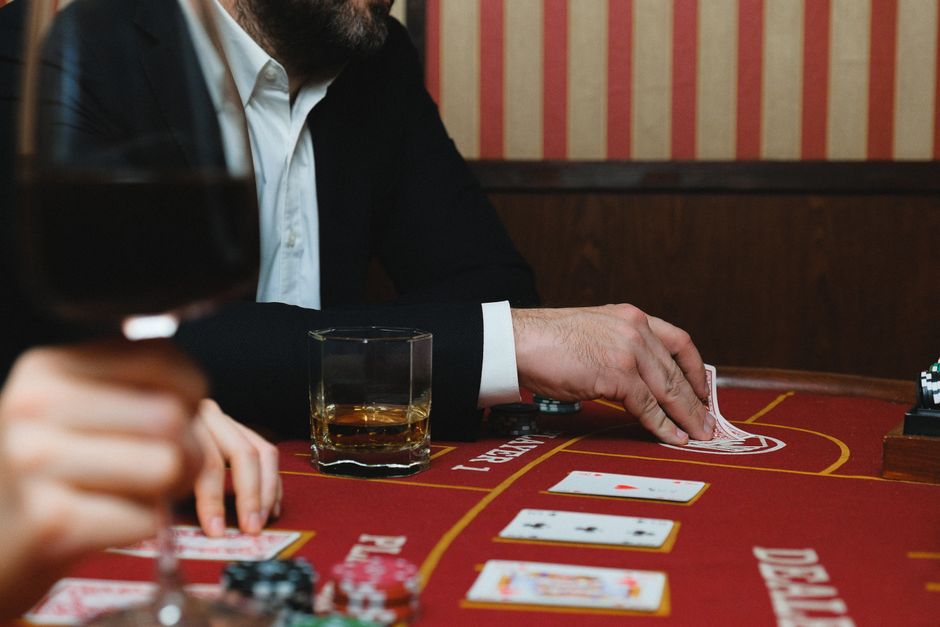


Most casino players lose money for one boring reason: they play games where the math is stacked against them by five, ten, even fifteen percent. Meanwhile, a smaller group of players quietly gravitates toward bets with house edges under one percent and grinds out a real edge over time. The difference between these two groups isn't luck or some secret system — it's understanding a single number that almost every operator buries in the fine print.
If you're going to gamble at all, you might as well understand what you're paying for the entertainment. Let's break down where the actual value lives across slots, table games, poker, and sports betting. A detailed guide is available at สล็อต.
Every bet in a casino has a built-in mathematical advantage for the house. That advantage is called the house edge, and it's expressed as a percentage of each bet you make. A 1% house edge means the casino expects to keep one cent of every dollar you wager over millions of hands. A 10% edge means ten cents — and that's a brutal tax on your bankroll.
The critical insight is that house edge compounds over volume. If you play 500 hands of blackjack at $10 a hand ($5,000 total wagered), a 0.5% edge costs you about $25 in expected losses. Play the same volume on a slot machine with an 8% edge and your expected loss jumps to $400. Same action, wildly different outcome. This is why experienced players obsess over game selection before they ever think about betting strategy.
Ground truth in the iGaming world: not all games are created equal. Here's the realistic house edge landscape you should carry in your head.
Notice the range. You can drop your expected loss by a factor of ten just by choosing differently.
Let's be honest about slots. They're not designed for long-term profit. They're designed for entertainment with a controlled bleed rate. Online slots are required in many regulated markets (UK, Malta, Sweden) to publish their RTP — the return to player percentage. A 96% RTP slot has a 4% house edge. A 94% RTP slot has 6%.
Two percentage points sounds trivial. It isn't. Over 1,000 spins at $1 each, that's a $20 difference in expected losses — and that's before you factor in volatility. High-volatility slots can eat 200 spins without a single meaningful win. Low-volatility slots trickle smaller payouts more frequently.
Practical tips if you're going to play slots:
Here's the thing that separates poker from everything else in a casino: you're not playing against the house. You're playing against other players, and the casino just takes a rake. That means a skilled player can sustain a positive win rate indefinitely — something that's mathematically impossible at roulette, slots, or baccarat.
But "can win" isn't "will win." The rake (typically 5% up to a cap) means you need to be in the top 20–30% of your player pool just to break even. At low-stakes online cash games, a 3 to 5 big blinds per 100 hands win rate is a solid, sustainable number for a winning regular. At micro-stakes, that's steady but unglamorous income.
If you want poker to be more than a slow bleed, focus on three things: positional awareness, bankroll management (at least 20 buy-ins for cash games, 50+ for tournaments), and reading player tendencies using tools like HUDs where permitted. The mental game matters as much as the math — tilt is the single biggest leak for players who otherwise play well.
Sports betting gets framed as a knowledge game, and it partly is. But the structural reality is that the vig (commission baked into the odds) is your real opponent. A standard -110 line in American odds carries a 4.76% theoretical hold per side. That's the tax you pay for the privilege of betting.
The single most effective tactic a bettor has is line shopping — comparing odds across multiple sportsbooks before placing a bet. A half-point or a few cents difference in juice compounds dramatically over hundreds of bets. Professional bettors maintain accounts at five or more books specifically for this reason.
Three habits that separate winning bettors from recreational ones:
Nobody walks into a casino to lose money slowly, but that's what happens when players pick games on vibes instead of math. The gap between a 1% edge and an 8% edge is the difference between a long, entertaining session and a short, expensive one. You don't need to memorize every rule or count cards to benefit from this knowledge. You just need to choose blackjack over 6:5 payouts, European over American roulette, Jacks or Better over random video slots, and line-shop your sports bets.
The casino industry is built on people not knowing their numbers. Knowing yours is the entire edge. Whether you're spinning slots for fun or grinding poker for profit, walk in with the house edge in your head — it's the cheapest piece of information in the building.

Combe Memo shares practical, down-to-earth guidance on local history and community memories for readers across the UK.


Leave A Comment